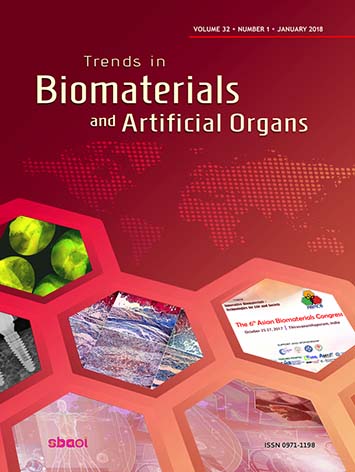
Recent Advancements in Microfluidic Organ on a Chip Technology: A Short Review
Keywords:
microfluidics, organ on a chip, multi-organ on a chip, micro-channels, microchipAbstract
An emerging idea known as "Organ-on-a-Chip" has possible applications in the investigation of the physiology and pathophysiology of tissues, including the determination of drug toxicity, and the fabrication of tissue models which could substitute animal experimentation. Organ on a Chip as a significant research platform entered in the current frontier of medical science and drug discovery due to a number of benefits, such as a reduction in sample utilization, improved separating methodology, analytical precision and high-throughput characteristics, flexibility, and reliability. This paper gives an overview on the concept of an organ on a chip and its scientific advancement in the past few years. The review also discusses the primary models developed and utilized for drug discovery and development along with their recent advancement, limitations, and future applications of organ on chip technology.
Downloads
Downloads
Published
Issue
Section
License
Copyright (c) 2025 Santosh Bhujbal (Author)

This work is licensed under a Creative Commons Attribution-NonCommercial-NoDerivatives 4.0 International License.
Copyright and Licensing
All articles published in Trends in Biomaterials and Artificial Organs are published Open Access. To ensure the widest possible dissemination of research while protecting the integrity of the original work, we utilize the Creative Commons Attribution-NonCommercial-NoDerivs (CC BY-NC-ND) 4.0 International License.
User Rights
Under this license, the public is free to share (copy and redistribute the material in any medium or format) under the following terms:
- Attribution: Users must give appropriate credit, provide a link to the license, and indicate if changes were made.
- Non-Commercial: Users may not use the material for commercial purposes. This includes, but is not limited to, the sale of the article or its use in promotional materials for-profit.
- No Derivatives: If a user remixes, transforms, or builds upon the material, they may not distribute the modified material.
Author Rights
Authors retain copyright of their work while granting the journal a non-exclusive license to publish. Because of the NoDerivs (ND) and Non-Commercial (NC) designations:
- Third parties (such as other researchers) must seek permission from the authors/journal to include figures, tables, or portions of the text in new works or commercial publications.
- Authors may deposit the "Version of Record" in institutional repositories immediately upon publication, provided the CC BY-NC-ND 4.0 license is clearly linked.